
PTSD Treatment Advances: Combining Psychotherapy with Brain Stimulation Improves Veterans’ Recovery

Post-traumatic stress disorder (PTSD) remains one of the most complex and persistent mental health conditions affecting military veterans. While traditional treatments such as psychotherapy and medication have helped many individuals, a significant number of patients continue to experience long-term symptoms. However, recent developments in neuroscience suggest that combining psychotherapy with non-invasive brain stimulation techniques may offer a more effective path to recovery.
As a result, researchers are increasingly focusing on integrated treatment approaches that address both the psychological and neurological dimensions of trauma.
The Scale of PTSD Among Veterans
PTSD affects a substantial portion of veterans, particularly those exposed to combat or high-stress environments. According to the U.S. Department of Veterans Affairs, approximately 11% to 20% of veterans who served in Iraq and Afghanistan experience PTSD in a given year.
Symptoms can include recurring flashbacks, emotional numbness, sleep disturbances, anxiety, and difficulty concentrating. Moreover, PTSD often coexists with depression and substance use disorders, which can complicate treatment and slow recovery. Therefore, improving treatment outcomes is not only a clinical challenge but also a major public health priority.
How Psychotherapy and Brain Stimulation Work Together
Psychotherapy, particularly cognitive behavioral therapy (CBT) and trauma-focused therapy, aims to help patients process traumatic memories and develop coping strategies. However, not all patients respond equally well to these methods.
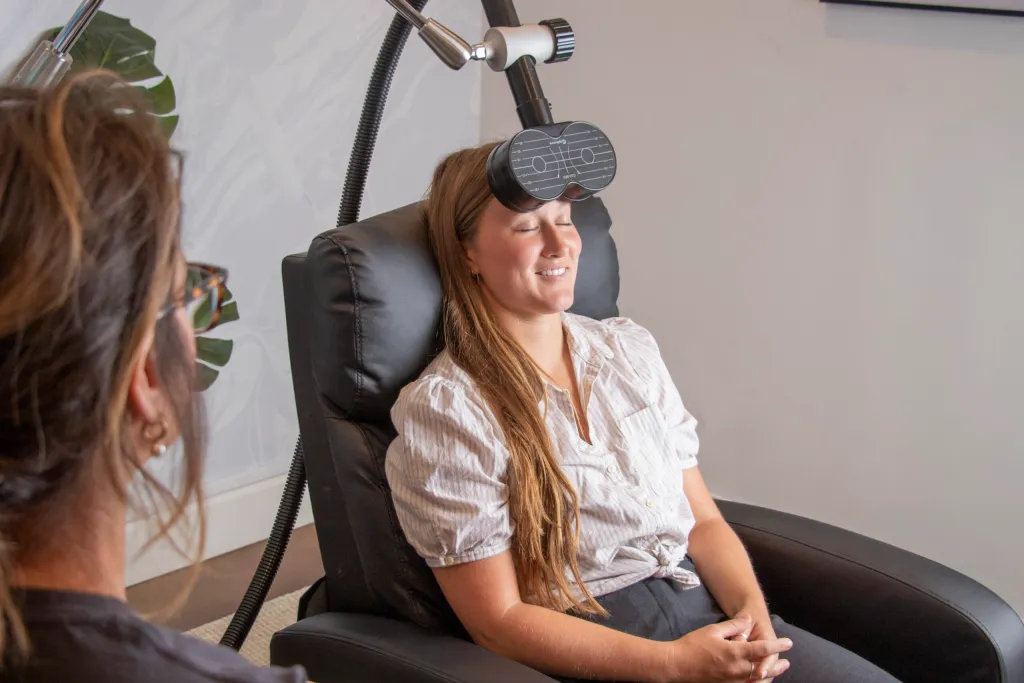
This is where transcranial magnetic stimulation (TMS) plays a crucial role. TMS is a non-invasive technique that uses magnetic pulses to stimulate specific areas of the brain, especially those involved in emotional regulation, such as the prefrontal cortex.
According to research published by the U.S. Department of Veterans Affairs, non-invasive brain stimulation techniques such as transcranial magnetic stimulation (TMS) can improve brain function and help regulate emotional responses in patients with PTSD. Brain stimulation can enhance neuroplasticity, making the brain more adaptable and responsive to therapy. In other words, TMS may “prepare” the brain to benefit more effectively from psychotherapy sessions.
Clinical Evidence and Statistical Findings
Recent studies have reported promising results from combining psychotherapy with brain stimulation. Clinical trials suggest that patients receiving integrated treatment may experience a 50–60% reduction in PTSD symptoms, compared to more modest improvements with single-method treatments.
Furthermore, recent clinical evidence reported by the Mayo Clinic suggests that TMS, when combined with psychotherapy, may reduce PTSD symptoms more effectively and support long-term recovery in patients. This combined approach may lead to faster symptom relief and more sustainable long-term recovery. In addition, some studies have observed improvements in cognitive function, emotional regulation, and overall quality of life. These outcomes suggest that addressing both brain activity and psychological processing creates a more comprehensive treatment model.
Advantages and Limitations of the Approach
One of the main advantages of non-invasive brain stimulation is its safety profile. Unlike surgical interventions, TMS does not require anesthesia or hospitalization and is generally well tolerated by patients.
Moreover, this method is particularly useful for individuals who do not respond to medication or who experience side effects from pharmacological treatments.
However, there are still limitations. Access to TMS technology remains restricted in some regions due to cost and availability. In addition, researchers emphasize the need for larger and more diverse clinical trials to confirm the long-term effectiveness of combined treatments.
A Shift Toward Integrated Mental Health Care
The growing interest in combining psychotherapy with brain stimulation reflects a broader shift in mental health care. Rather than treating PTSD as a purely psychological condition, modern approaches recognize the importance of underlying brain mechanisms.
Consequently, treatment strategies are becoming more interdisciplinary, integrating psychology, neuroscience, and technology. This shift may also influence how other mental health conditions, such as depression and anxiety, are treated in the future.
The combination of psychotherapy and non-invasive brain stimulation represents a promising advancement in PTSD treatment for veterans. By targeting both emotional processing and brain function, this approach offers a more comprehensive and potentially more effective solution.
While further research is needed, current findings suggest that integrated therapies could significantly improve recovery outcomes and quality of life for those affected by trauma.
