
Spanish Universities Use Campus Events to Build Stronger Student Integration

Spanish universities are turning campus events into a practical tool for student integration as Spain attracts growing numbers of international and Erasmus students. From welcome days and Erasmus activities to Women’s Day events, sports programmes, cultural workshops and buddy systems, universities are turning campus life into a key part of the student experience.
The issue has become more important as Spain strengthens its position as a major destination for international students. In the 2023–2024 academic year, Spain had around 149,280 international enrolments in its universities, with 59% enrolled in degree programmes and 41% participating in exchange programmes. International students represented around 11.5% of university enrolments overall, rising to 27% in master’s programmes and 29% in doctoral studies.
This growth means integration can no longer be limited to orientation week. For many students, especially those arriving from another country, university life involves more than attending classes. They also have to adapt to a new language, a new city, different academic expectations and unfamiliar social environments.
Campus Events Are Becoming Social Infrastructure
Universities have traditionally treated events as extra activities. Today, however, they are increasingly becoming part of what could be called the university’s social infrastructure. In practical terms, this means activities that help students meet people, understand campus life, participate in debates and feel connected to the institution.
This can include welcome sessions, cultural weeks, student association fairs, sports events, volunteering projects, equality campaigns, film screenings, public talks and international student gatherings. These activities may look informal, but they play an important role in reducing isolation and building a sense of belonging.
The scale of the challenge is clear. A recent Fundación BBVA and Ivie report found that only 20 universities educate 59.4% of all international students in Spain, showing that internationalisation is highly concentrated in certain institutions. The same report also noted that Madrid, Catalonia, Andalusia and the Valencian Community concentrate a large share of Spain’s international students.
That concentration gives universities in major student cities such as Madrid, Barcelona, Valencia, Seville and Granada a particularly important role. They are not only receiving students; they are also expected to create environments where those students can participate socially and academically.
Women’s Day as One Example of Campus Participation
One visible example of this wider strategy is International Women’s Day, marked every year on 8 March. Across Spain, universities use 8M not only as a symbolic date, but also as an opportunity to organize debates, exhibitions, workshops, sports discussions and awareness activities.
In 2026, CRUE, the Conference of Rectors of Spanish Universities, joined the commemoration under the theme “Rights. Justice. Action. For ALL women and girls.” CRUE said universities must promote safe environments free from harassment and violence, while ensuring women’s full participation in academic, scientific and professional life.
The importance of these events is that they bring students together outside normal lectures. A student who may not attend a formal university meeting might still join a film screening, a sports discussion, a cultural event or a public debate connected to Women’s Day. In this sense, 8M becomes one example of how universities use social issues to create participation and visibility on campus.
Spanish universities have taken different approaches. The Universidad Complutense de Madrid organized a Women’s Day event focused on women in sport, designed to make female athletes and women’s participation in university sport more visible. The University of Barcelona connected its 8M programme with the idea of “Knowledge that transforms,” linking gender equality with academic culture and public memory. The University of Seville promoted its “Marzo Violeta” programme, extending Women’s Day-related activities across March rather than limiting them to a single date.
These examples show that Women’s Day is not the whole story, but it is a strong illustration of the broader trend: universities are using public events to make students more active participants in campus life.
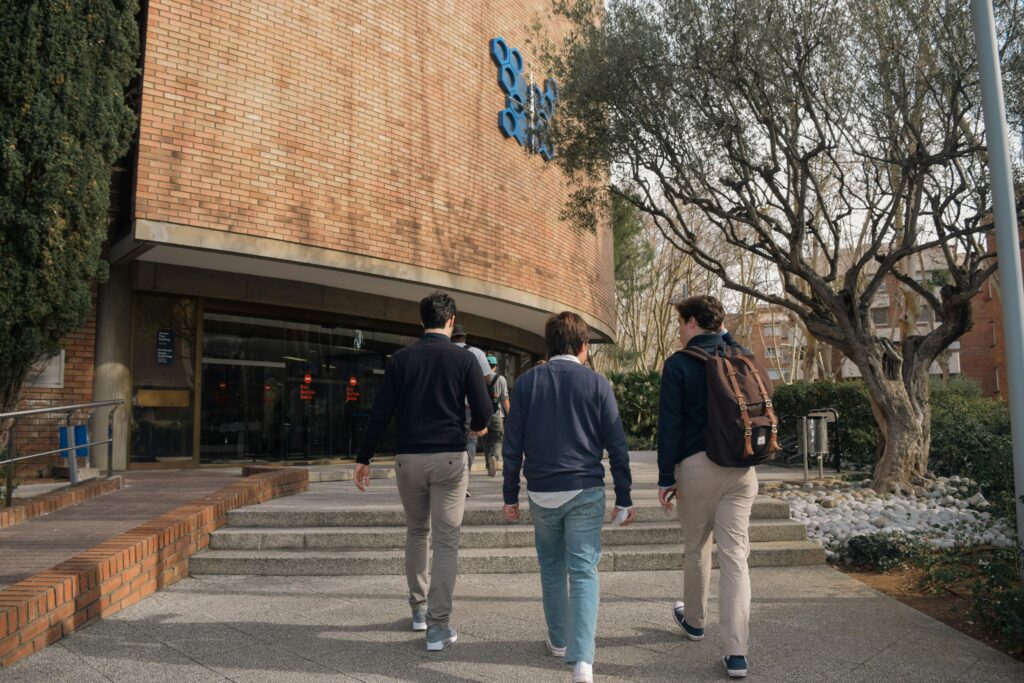
The Surprising Angle: Spain Attracts Students, But Integration Is Uneven
The most newsworthy point is not simply that universities organize events. The bigger issue is that Spain is attracting large numbers of international students, but integration is uneven across the system.
According to the Fundación BBVA and Ivie report, Spain has around 149,000 international students, with 60% studying through ordinary enrolment and 40% through mobility programmes. The same report found that students from Latin America and the Caribbean represent 44.3% of international students in Spain, followed by European students at 35.5%.
Another striking detail is the difference between public and private universities. Private universities represent 18.5% of total students in the Spanish university system, but account for 44.8% of foreign students enrolled through ordinary degree programmes.
This matters because integration is not experienced equally everywhere. Some universities have highly international campuses, while others remain more local. Some students arrive through short-term Erasmus mobility, while others enrol for full degrees. Each group faces different integration challenges.
UCLM Shows How Peer Support Can Work
The University of Castilla-La Mancha, known as UCLM, offers a clear example of practical integration through its Buddy Programme, also called the Cicerone Programme. UCLM says it receives around 1,000 foreign students every year and assigns them a local student, or “buddy student,” to help them integrate into social life both inside and outside the university.
This model is important because it addresses the everyday side of integration. Large public events can create visibility, but a buddy can help with practical questions: how to understand the campus, how classes and exams work, where university services are located, how to join student associations and what cultural or leisure options exist in the city.
UCLM’s model is especially relevant because the university operates across several campuses, including Albacete, Ciudad Real, Cuenca and Toledo. In this kind of multi-campus structure, integration cannot depend only on one central event. It needs local contact, student-to-student support and repeated opportunities for participation.
The programme also benefits local students. UCLM says being a Cicerone student allows them to meet international students, learn about other cultures and improve foreign-language skills. It can also be considered a merit when applying for international mobility grants.

Why Campus Integration Matters
For universities, integration is now linked to reputation, student satisfaction and international competitiveness. Attracting international students is only the first step. If students feel isolated, disconnected or unsupported, the university’s international image becomes weaker.
A representative from the Universidad Autónoma de Madrid’s student mobility environment, said that integration should not be treated as a single welcome-week task. According to this view, students need early contact with local peers, clear guidance and repeated opportunities to participate in campus life.
“Orientation sessions are useful, but they are not enough on their own,” the representative said. “Students integrate more naturally when they are invited into everyday university life through cultural events, sports activities, student associations and informal meetings.”
Campus events help solve this problem because they create low-pressure spaces for students to meet. A lecture may educate students, but a workshop, sports activity, buddy meeting or cultural event can help them build actual relationships.
This is particularly important for Erasmus students and international students who may only stay for one semester or one academic year. They have less time to adapt, so the university has to create faster and easier routes into social life.
As the UAM representative added, “For Erasmus students, one semester passes very quickly. If universities wait too long, students may leave before they have really connected with the campus community.”
Conclusion
Spanish universities are increasingly using campus events as part of a wider student integration strategy. Activities linked to Women’s Day, Erasmus networks, welcome events, sports programmes, cultural workshops and buddy schemes all help students move beyond simply attending classes.
The strongest news angle is that Spain is already attracting large numbers of international students, but integration remains uneven and concentrated in certain universities. This makes campus life more important than ever.
Women’s Day events show how universities can use public campaigns to create participation and visibility. UCLM’s Buddy Programme shows how direct peer support can help international students adapt in a more personal way. Together, these examples suggest that the future of student integration in Spain will depend not only on admissions and mobility numbers, but also on how universities build everyday spaces of belonging.
