
Artificial Intelligence is Rewriting Mathematics
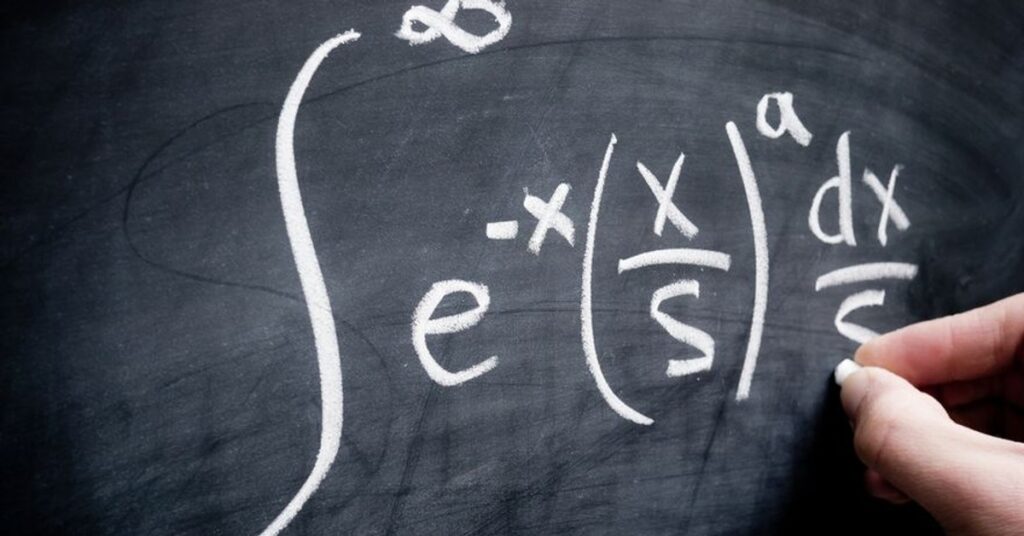
Artificial intelligence is starting doing something that once seemed almost impossible. AI help mathematicians build and verify proofs. That shift is giving researchers a real reason to rethink what mathematics may look like in the years ahead. For centurie mathematics was seen as one of the purest forms of human thought.
A shift in the research world
The conversation has become urgent because artificial intelligence is move from theory to practice. Manon Bischoff, writing for Scientific American, describes how a system called Gauss was able to formalize complex work related to Maryna Viazovska’s award-winning sphere-packing project. This matters because translating a human-written proof into computer-readable code can take months or even years.
Similarly, Alex Wilkins notes that AI has begun to solve real research problems and help verify cutting-edge proofs. Some experts now warn that the profession is undergoing one of the fastest evolutions the field has ever seen.
What mathematicians do best
Humans remain essential. Mathematician Alberto Enciso, believes that while Artificial intelligence can amplify the work of an expert, it still needs human intuition to guide it. He argues that the most valuable skills today are:
Vision, intuition, depth, and the capacity to grasp context.
The challenge is that AI can sound convincing even when it is wrong. In mathematics, correctness is everything. This is why researchers focus on verification. Michael Douglas, a scientist at Harvard, explains that generative AI can write proofs that automated systems can then check for hallucinations.
The classroom is changing
The progress of artificial intelligence calls into question the entire way the class is taught.
Michael Brenner, a professor at Harvard, confirm that education is being reshaped. Teachers are moving away from simple procedures and toward deeper conceptual work. The goal is no longer just to find the answer, but to understand why the answer is correct and how to use AI to explore even harder questions. This profound shift is also visible in other intellectual areas, such as journalism.

A new style of mathematics
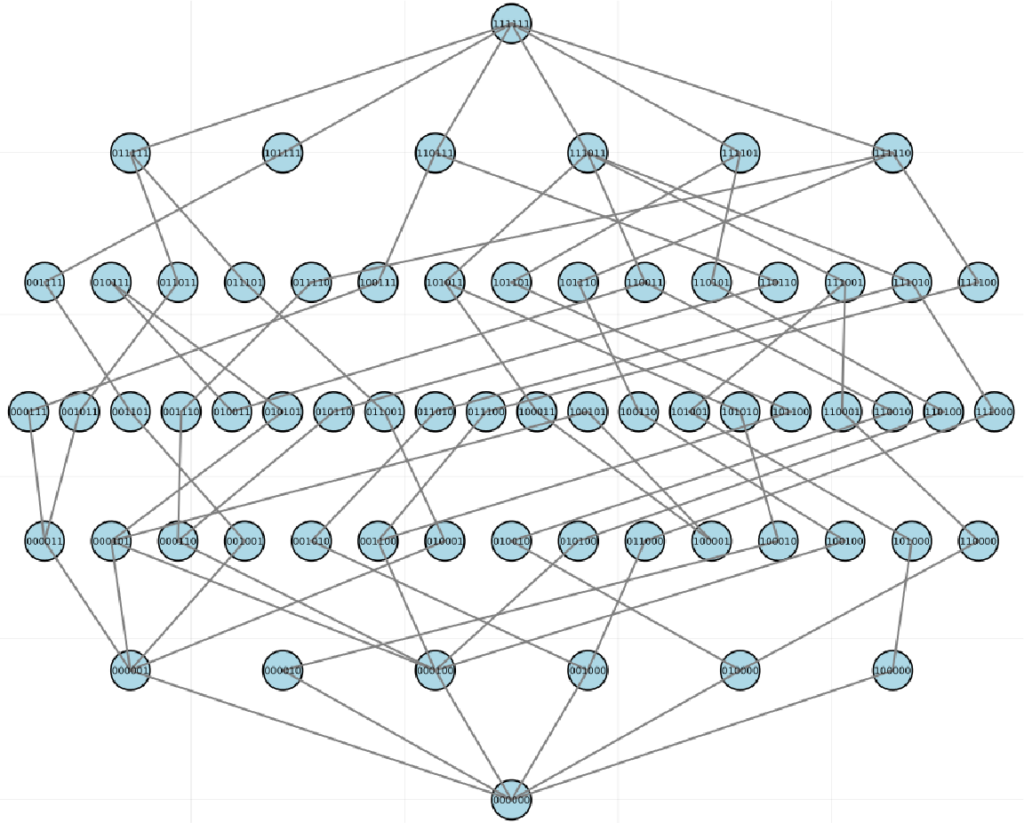
As MIT Technology Review points out, the real potential of AI is helping researchers crack problems that were previously uncrackable. Will Douglas Heaven notes that breakthroughs often come from a new way of thinking, which is where tools like PatternBoost can help by generating similar mathematical statements for a researcher to study.
Research published by Alex Davies and colleagues confirms that machine learning can guide mathematical intuition. Their work demonstrated new connections between the geometric and algebraic structures of knots a discovery that had not been found by humans alone.
Artificial intelligence and the future role of the mathematician
Is artificial intelligence rewriting mathematics? In many ways, it is. It is changing how community check proofs, how teachers teach students and how people find new patterns. But it is not replacing the mathematician. Instead, it is creating a new style of work where human experts act as guides and strategists for powerful machine systems.
The emphasis is shifting from manual calculation toward big-picture understanding. As mathematician Johan Commelin argues:
We are radically changing what we do, but in the future, we will still recognize the work as mathematics, just in a new, more efficient style.
