
More than neighbours: Poland’s role in Russian-Ukrainian war
The Russian invasion of Ukraine began in 2014 when Moscow annexed Crimea, part of Ukrainian territory. However, a full-blown conflict started when, at the turn of 2021-2022, Russian troops began to gather along the Ukrainian border. Even though Vladimir Putin stated that he did not have a plan to begin a war with Ukraine, on February 21, 2022, he announced that Russia recognizes the self-proclaimed republics in Donbas and supports their claims to the entire Donetsk and Luhansk regions. Three days later, on February 24, 2022, Russia launched a full-scale invasion of Ukraine that continues to this day.
Institutional Response to war
The war came as a shock to the entire world. When Ukrainians began seeking refuge outside their own country, Poland, as a neighbor and opponent of Russia’s actions, decided to help Ukraine on many levels. The first was to provide shelter and care for citizens fleeing Ukraine. According to data from the UNHCR, at the beginning of 2025, Poland hosted approximately 1 million registered refugees from Ukraine- mostly women and children, representing approximately 2.5% of the country’s population. Poland enabled refugees to quickly obtain a PESEL number, providing access to healthcare, education, the labor market, and social benefits. In addition, they were provided with temporary housing.
Civilian Support Systems
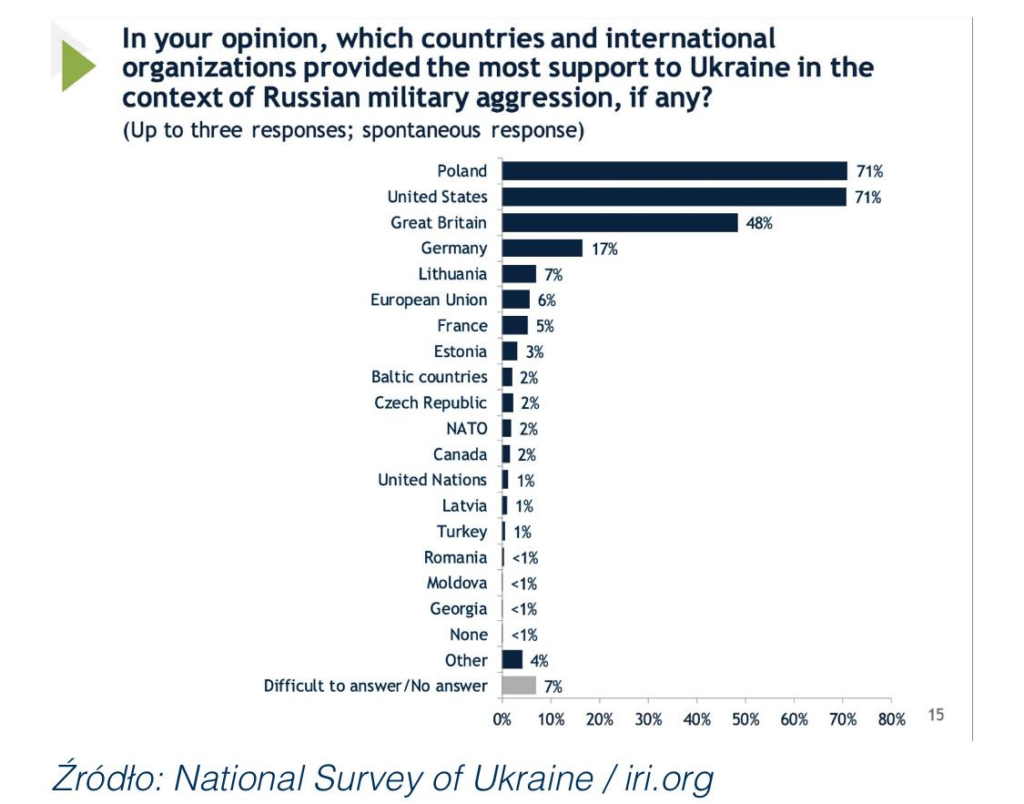
Beyond government actions, ordinary Polish citizens had a significant impact. These people welcomed war victims into their homes, helping them find jobs, raising children together, and living as one family. Many Poles felt responsible for helping their neighbors out of empathy, as well as fear that if Russia won the war, Poland would become its next target. For this reason, various collections were organized and essential items were sent to Ukraine. Currently, many NGOs, such as Adra Polska and Relief for Ukraine, are organizing collections for power generators, which is especially important given the cold winter. This help is recognized by Ukrainians; a study by the International Republican Institute found that 71% of Ukrainians believe Poles are the most instrumental in helping Ukraine fight the Russian aggressor.
Military Aid and Fiscal Impact
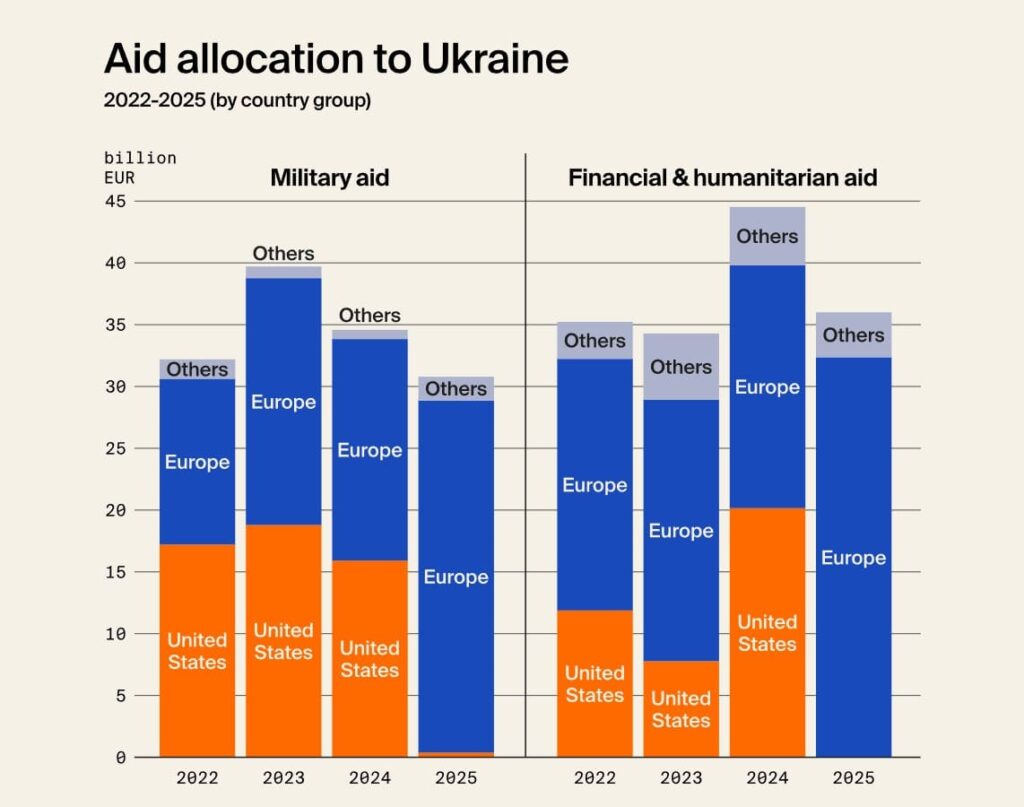
However, the most significant form of assistance is undoubtedly military support. According to the Chancellery of the President, the value of total military assistance amounted to approximately €15 billion. This represents nearly 5% of Poland’s GDP, making Poland a leader in aid when calculated per GDP. Poland has transferred318 tanks, over 586 armored vehicles, 10 MiG-29 fighters, 10 Mi-24 helicopters, and about 100 million pieces of ammunition. This represents 14% of the total military aid Ukraine received globally. When considering only European aid, Poland’s contribution represents almost 30% of the total amount provided by a single country.
Wsparcie międzynarodowe
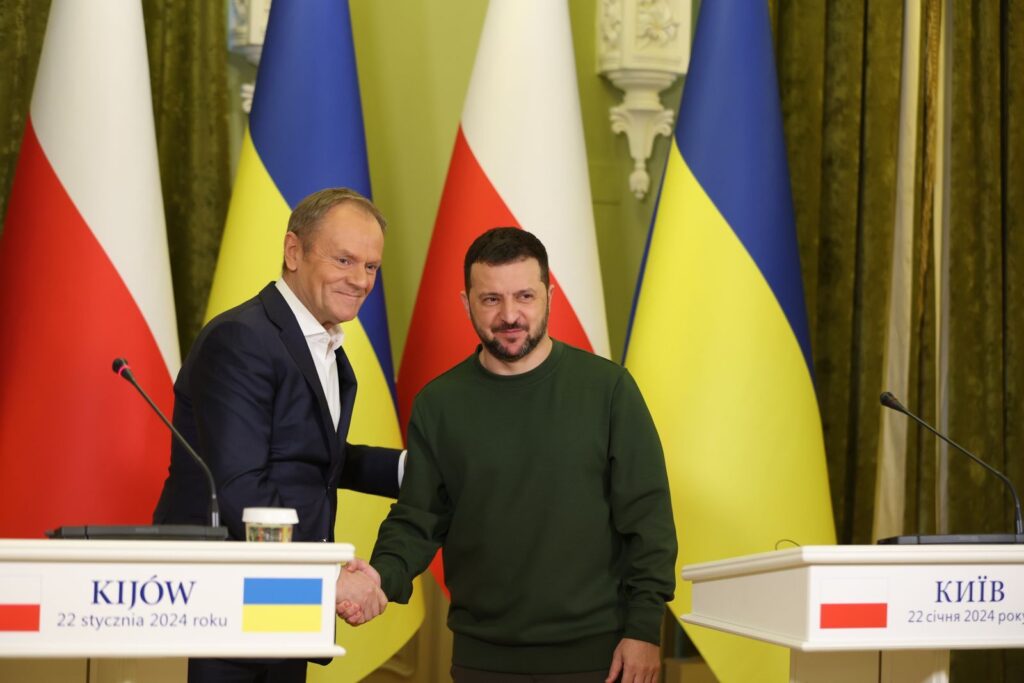
The transfer of funds also entails support on the international stage. Thanks to negotiations and support for President Zelenskyy’s actions, Ukraine can count on continued financial support. Despite the change of government in Poland, the vast majority of Polish politicians actively support Ukraine. This is reflected in the words of Prime Minister Donald Tusk, who stated that investing in Ukraine’s defense is about helping Europe and Poland:
„Nasze dzisiejsze działania mające na celu wzmocnienie zdolności obronnych Ukrainy nie są jedynie środkiem tymczasowym… są strategicznym krokiem w obronie bezpieczeństwa Ukrainy, Polski i całego Zachodu”.
Difficulties in Polish-Ukrainian relations
However, Polish-Ukrainian relations are not so rosy. Historically, Poland and Ukraine have a complicated relationship. This is due to ongoing discussions about the Volhynian massacres during the 1943-1945 war, when Ukrainian nationalists brutally murdered the Polish population. Despite the passage of almost 80 years, this topic remains a nexus of many arguments between these two nations. Another issue that discouraged some Poles from supporting the war in Ukraine was the situation when Ukrainian grain flooded the Polish market. Excessive imports of cheaper Ukrainian grain, intended for export to the Far West and Asia, largely stayed in Poland, leading to protests by Polish farmers, who were forced to significantly lower grain prices. In response to farmers’ financial losses, Poland introduced a unilateral import ban in 2023, which – despite pressure from the European Commission – is being maintained.
Cybersecurity and Hybrid Threats
However, Poland is not immune to Russian cyberattacks. This hybrid war aims to destabilize infrastructure and cause social chaos. While countries like Estonia, Lithuania, and Germany face similar actions, Poland is currently under record-breaking attack. The last major incident took place on December 29, 2025, when a cyberattack on energy infrastructure affected heat supplies to nearly 500,000 customers. According to data from the Ministry of Digital Affairs from October 2025, Poland currently records between 2,000 and 4,000 cyberattacks per day. Most are successfully repelled. Despite this, the scale of attacks is growing. In 2024, 111,000 real incidents were recorded, and in 2025, this number increased to 600,000. Therefore, it is in Poland’s interest to end the war so these attacks do not escalate into full-blown conflict.
Strategic Alignment
The past years have shown that Poland remains one of Ukraine’s most important allies in Europe. By setting standards in military and humanitarian matters Poles showed the world that the unity of the West begins on the common border, which has become a corridor of freedom. Despite their differences the common goal of Kyiv and Warsaw is to bring an end to the conflict and to prevent Russia from acting in a way that threatens the democracy and freedom of other nations.
