
Artificial Inteligence in war- How US army uses AI in Iranian war
It’s become a fact that artificial intelligence has penetrated every aspect of human life at an alarming pace. While The use of artificial intelligence for military purposes used to be just a mere thought, now it has now become a reality. The United States admits to using artificial intelligence tools during the Epic Fury operation in Iran.
The beggining
Signing of a contract between the US government and Anthropic has been a hot topic for several weeks. Their AI assistant, Claude, is used to conduct various types of military operations in the Middle East. However, details of the system’s use were previously unknown, and controversy surrounding the contract grew as the company was blacklisted by the government, citing it as a threat to the US government.
Although the Pentagon uses systems developed by Palantir Technologies, they are largely based on innovations from Anthropic. OpenAI also has a role in this, and unlike Anthropic, it doesn’t draw sharp boundaries regarding the possible use of artificial intelligence for autonomous weapons in the future.
How US army uses AI
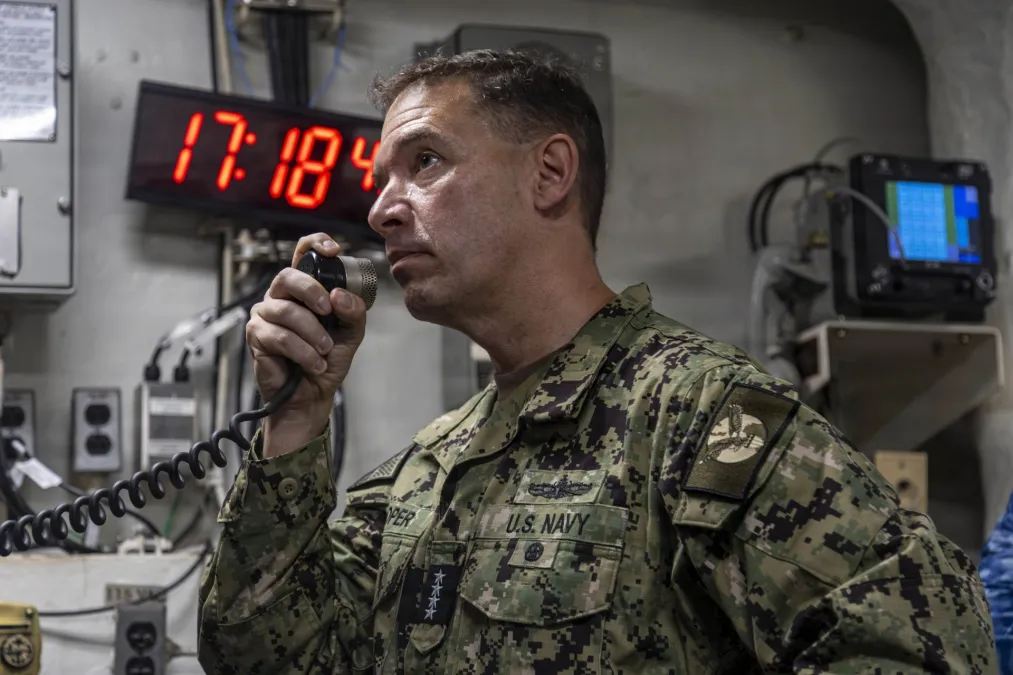
In previous weeks, the US military’s use of artificial intelligence was shrouded in secrecy, but U.S. Navy Admiral Brad Cooper, in an official speech on U.S. Central Command, explained that AI’s primary use is analyzing vast amounts of data, allowing commanders to make decisions faster than the enemy anticipates. Therefore, AI’s primary purpose is to support decisions.
Lauren Kahn of Georgetown University’s Center for Security and Emerging Technology expanded on this topic, pointing out that it’s also about organizing logistics and autonomous systems like aircraft upgrades, using data fusion to combine sources from different sensors and shooters.
Human Ethical Oversight
Despite this, controversy is growing over whether, given that research shows AI systems are not 100% reliable, they should be making decisions about human lives. However, Admiral Brad Cooper refutes these allegations with the following words:
Humans will always make final decisions on what to shoot and what not to shoot and when to shoot, but advanced AI tools can turn processes that used to take hours and sometimes even days into seconds.
The future of artificial intelligence in warfare is uncertain and dynamic. Due to growing tensions and conflicts, it is not yet ready for full-scale use in armed conflict. Although we are already seeing its beginnings in the form of data analysis, it is important to emphasize that humans should be responsible for human lives and bear responsibility for AI and its shortcomings.
